
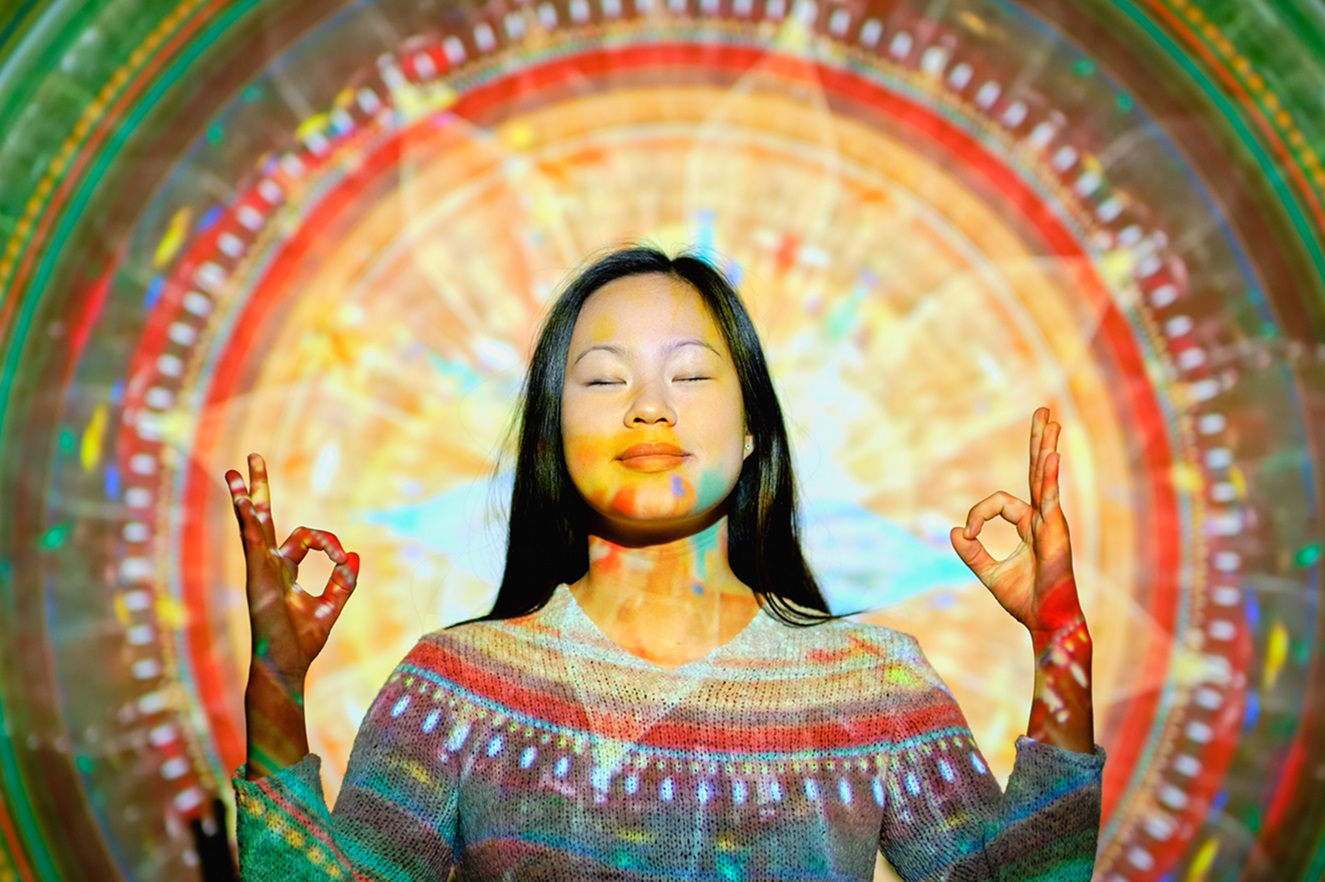
Empathy, clairvoyance, and clairsentience are phenomena that have become integral parts of human consciousness and spiritual practice. These are gifts, and they provide a deeper understanding of people’s emotions, thoughts, experiences, and energies.
In this article, I aim to enlighten you on the significance of these spiritual concepts. So keep reading if you’re keen to learn more!
The Significance Of Empathy In Spiritual Practice
In essence, empathy is the ability to relate to others and their life situation. It’s often described as the ability to feel and understand what others feel, or to put oneself in somebody else’s shoes. It is not only a vital social skill but also a potent spiritual tool. It is empathy that allows us to connect deeply with others emotionally and spiritually.
According to scientific literature, the development of empathy is really essential for us. However, some people say that they are doing just fine without it. Some, according to scientific studies, are born with greater empathy, while others are not and they learn it throughout their whole life.

How Does Empathy Work?
Empathy involves feeling another person’s emotions as if they were your own. This happens when mirror neurons in our brain mimic the emotional responses we observe in others. In short, mirror neurons are activated not only when we perform an action, but also when we observe someone else perform that same action, such as yawning.
But what’s important is that this capacity for shared experience cultivates compassion, understanding, and kindness, which are all critical elements for meaningful spiritual growth.
Also, empathy is a vibration through which fear cannot break through. Empathy creates a powerful energetic shield, resonating at a frequency of love, understanding, and connection. When we approach others with genuine compassion, we go past fear-based reactions. This allows us to remain grounded and open-hearted. In this space, fear dissolves because it’s unable to get through the higher vibration of empathy.
The Role Of Empathy In Spirituality
In spirituality, unity consciousness, that is, seeing oneself mirrored in all beings, is highly valued. Here, empathy becomes crucial as it enables us to see ourselves as inseparable from others.
As such, empathy allows us to go beyond the illusionary boundaries between ourselves and others, and nurture mutual relations. This is fundamental to many spiritual practices.
Clairsentience – A Deeper Level Of Perception
Now let’s talk about clairsentience. In other words, clairsentience, or ‘clear-feeling’, represents an even deeper level of perceptual sensitivity where individuals can sense subtle energies around them including those from objects, places, and other people.
It is different from physical sensing because it operates beyond conventional sensory channels, tapping into what some might refer to as the sixth sense or psychic intuition, and allowing access to information unavailable through ordinary means.
Just like empathy, clairsentience enables a deeper connection between an individual and their environment. It’s like having a spiritual radar that can detect energy shifts on an unseen level.
The Difference Between Clairsentient And Clairvoyant
Just like intuition, clairvoyance and clairsentience, are innate abilities we all possess. In simple terms, a clairvoyant sees while a clairsentient feels. You can see, and spatial images appear in your mind, or you can feel, too. And suddenly you know. Clairvoyance is not one-dimensional. It requires creating appropriate, specific, and precise questions for an answer to appear. And that answer lies within you.
All Children Are Clairvoyant From Birth
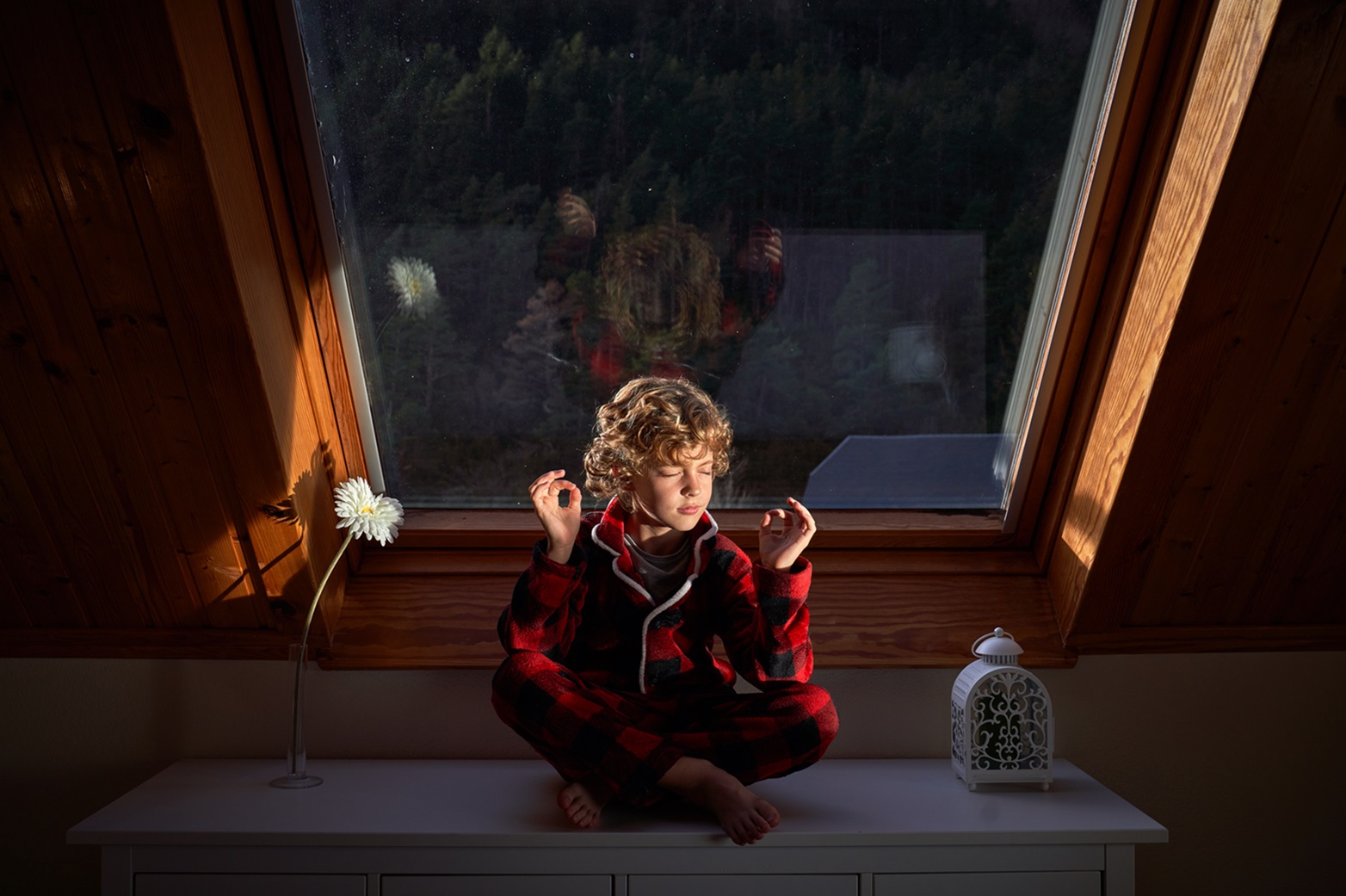
Yes, all children have the ability of clairvoyance and clairsentience, but over time, influenced by a large amount of information and an insensitive approach, we lose touch with these abilities.
How can we help children develop these skills? Let’s encourage children to explore emotions – both the beautiful ones, such as love, kindness, gentleness, nobility, or support, and the difficult ones, such as anger. Ask a question and let them feel: “How do you feel when you are nice? And when you are annoyed?”. Through such questions, we teach children how emotions affect their lives and how they can use them to better understand themselves and the world.
Children naturally have these abilities developed. However, we often lose touch with these abilities because our society places more importance on logical thinking and intellectual education. Instead of asking children, “What do you know?” or “What do you think?”, let’s start asking questions that develop their intuition and extrasensory perception like: “How do you feel? What images come to mind when you think about it? How would you do it?”
To develop these skills, you must feel what you see when you close your eyes and contemplate. Clairvoyance is seeing an image in contemplation.
Learning Clairvoyance – How To Begin?
We are really all-knowing. But to develop clairvoyance and clairsentience, you need one key element – belief in yourself and your senses. In reality, not only children but all of us are clairvoyants, we just don’t practice it.
It’s worth asking yourself: “What do I feel? What information comes to me?”. And just believe it. In this journey, it’s about developing expanded perception, sensory perception, and learning to listen to your own body and what intuition tells us. In the beginning, it’s just a matter of learning this. And once it has developed, it’s wonderful. You just have to get rid of your disbelief. And children just play with it. So let’s be like kids!

Questions That Open Perception
True clairvoyance is not just about looking, but also feeling and asking questions that allow you to open your inner space of knowledge.
Don’t say, “I know”, “I think”, “I read”, because that is from the mind, but “I feel”, “I feel within myself”, and “I see”. Then the information comes to you, the information is already within you. And this is how you start shifting to a different perception. But the mind cannot be dominant here, you have to feel it.
By asking questions like: “What do you see when you close your eyes?”, “What emotions does that evoke?” or “How do you feel about it?”, you open yourself to answers that are within you.
In order to understand how logical everything is, just feel. Feel, that if something is good for you, then it is “wow, yes”. And if something is not good, then “uh-uh, no”. Even your body shows it to you. The body relaxes or tightens.
Clairvoyance – Our Natural Senses
Clairvoyance is a natural ability that dates back to ancient times, when people hunted and had to rely on instinct to survive.
We are not just a physical body, we are also an energetic body. This energetic body explores and receives information. And it has nothing to do with the third eye, because that is one of the misconceptions of clairvoyance.
So just imagine your bathroom. You see an image that may not be as clear as reality, but still clear enough in your mind. That is clairvoyance. It’s worth trusting these images, not tensing the body but relaxing and allowing yourself to imagine things without tension. Sometimes an image appears that you need to interpret (although images can be interpreted differently), sometimes an intuitive feeling, and sometimes information that seems to have always been within us.
Clairvoyance And Clairsentience – How Do They Work In Everyday Life?
Clairvoyance can be useful in situations where imagination or creative solutions are needed. Unlike intuition, which appears as a fleeting flash, clairvoyance allows you to open up the entire space of knowledge and delve deeper into a given situation.
It is worth remembering that each person experiences these abilities differently – some see images, others feel, others put it in writing, and still others hear.
How To Find The Truth In Clairvoyance?
Clairvoyance is not about having grand visions or predicting the future, like Nostradamus did. Seeing the future is quite difficult because there are so many variables and circumstances. Everything is constantly changing, so predicting the future doesn’t make sense. Besides, it would evoke fear of clairvoyance.
Clairvoyance cannot be called a vision, but an image. Clairvoyance and clairsentience are rather used for self-discovery and understanding the intentions of another person. It gives freedom, provides information, serves to reveal answers that are already within us. Because everything is in the field of information.
You may ask, what is the truth then? Everything is, only not everything materializes into reality. There is only one important thing to distinguish between clairvoyance and fantasy. When you fantasize, you dream about something. And in clairvoyance, you ask a question and the answer appears. You just have to train your body to receive information and it’s just a matter of practice.
Can Anyone Develop Clairvoyance Or Clairsentience?
Finally, can everyone be clairvoyant? Yes! While some people may be naturally more clairsentient or clairvoyant, it is believed that with practice and openness to spiritual growth, anyone can cultivate this ability.
The key lies in asking questions and practicing a lot. Start with simple exercises, such as listening to your emotions, asking questions, and opening up to the answers that are hidden within you. Clairvoyance is like any other skill – the more we practice, the better we understand it.

