
We live in a busy world, so many of us are looking for ways to connect with our inner selves, find meaning in our lives, and grow as a person.
One great tool that’s becoming more and more popular is the practice of visualization and storytelling. By tapping into our imagination through visualization and using storytelling techniques, we can connect with our spiritual side, unlock hidden potential, and begin a journey of self-discovery. However, we must tell these two methods apart, so let’s do this now!
Are Visualization And Storytelling The Same?
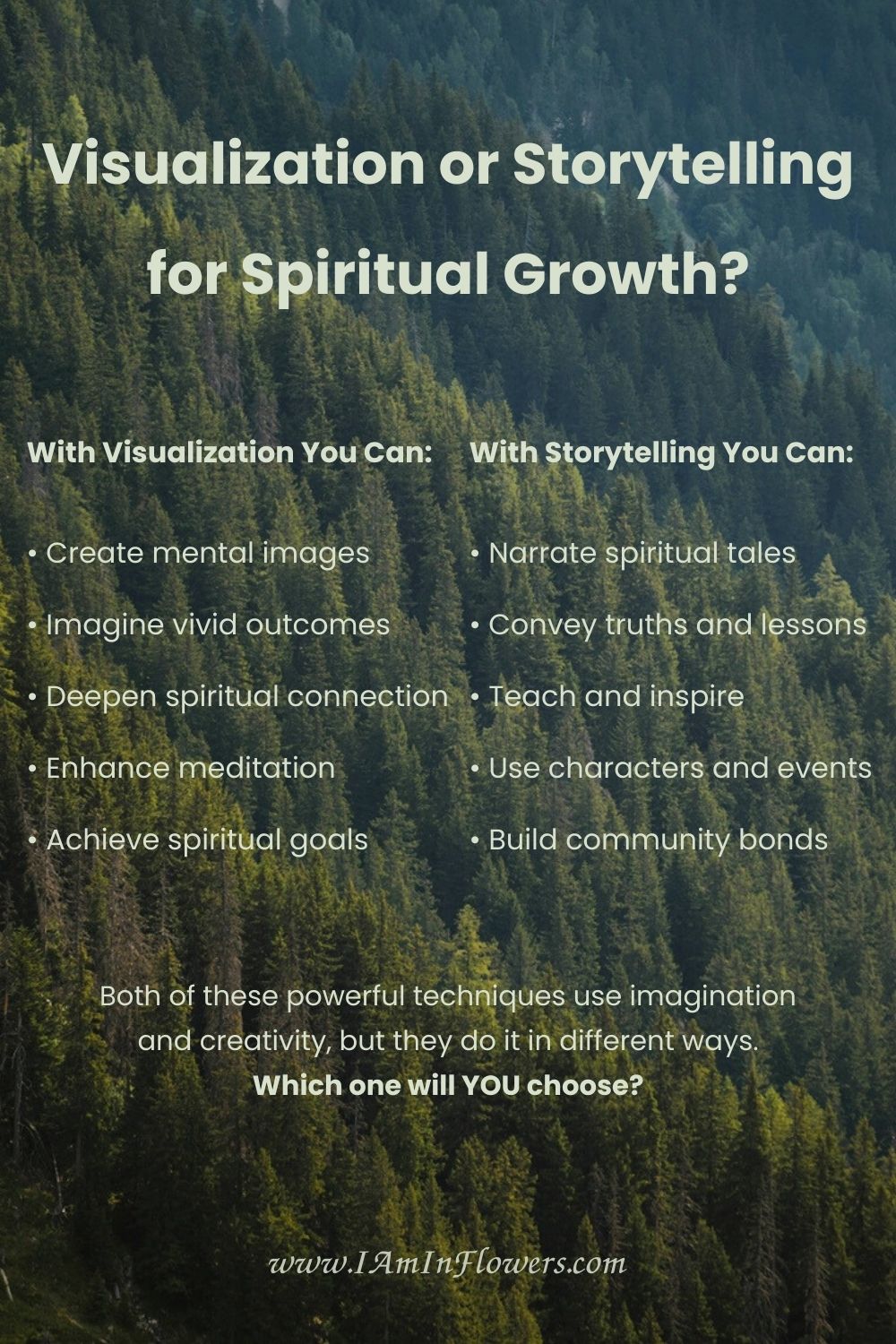
Visualization and storytelling in spirituality are related yet distinct practices, each serving unique purposes in the spiritual journey.
Visualization is a technique that’s all about creating mental images or scenarios to achieve a specific goal or desired outcome. From a spiritual perspective, this technique can be used to focus the mind, enhance meditation, and cultivate a sense of inner peace.
Besides, you can use visualizations to manifest your desires or intentions, and to connect more deeply with your spiritual beliefs or higher realms of consciousness.
You can imagine a specific outcome, surroundings, or interaction, all in vivid detail and sometimes with the help of a spiritual guide or teacher. Visualization is often used in meditation and manifestation practices. This technique helps align your thoughts and emotions with your spiritual aspirations, bringing about personal transformation and inner peace.
Experts believe that the mind is a powerful tool that can shape our reality based on the images we hold within it. According to renowned spiritual teachers, such as Eckhart Tolle and Deepak Chopra, visualization can help you align yourself with your true purpose and create positive changes in your life.
By visualizing yourself living out your dreams or embodying specific qualities you wish to cultivate, you can create a blueprint for success that guides you towards your goals.

Storytelling is another powerful method for personal growth that has been used for centuries by different cultures around the world. People are natural storytellers who use narratives to make sense of their experiences, pass down wisdom from generation to generation, and create connections with other human beings.
Storytelling in spirituality is about sharing spiritual tales, myths, parables, or personal experiences to convey deeper truths, moral lessons, or spiritual principles.
The goal of these stories is to teach, inspire, provide value, and connect individuals with spiritual traditions and community heritage.
Storytelling uses a narrative structure with characters and events to engage listeners or readers, often stirring up both emotional and intellectual responses. Through storytelling, spiritual wisdom is passed down through generations, nurturing a sense of community and shared understanding.
Through sharing stories with others, people also build community bonds based on shared experiences and emotions. Collective storytelling has the power not only to heal one person, but also the entire society, by fostering empathy and understanding among diverse groups.
When it comes to spiritual growth, storytelling can be an effective way to explore your beliefs, values, and identity. By crafting stories about your life journey, struggles, and triumphs, you can gain insights into yourself, learn from past mistakes, and find inspiration for the future.
Storytelling allows you to weave together various elements of your existence into a cohesive narrative that gives meaning and purpose to your life.
How Visualization Complements Storytelling
When you bring visualization and storytelling together, they can really boost each other’s impact, giving you a powerful way to transform yourself.
When you imagine yourself living out scenes from your life story, you form a deeper emotional bond with those moments, making them more vivid and memorable.
On the flip side, adding storytelling elements like characters, dialogue, and plot twists to your visualizations makes the process of reflecting on yourself and discovering new things way more engaging. Combining these techniques creates a rich, immersive experience that connects with different parts of your mind, helping you uncover fresh insights about who you are.
Overall,
Visualization and storytelling are distinct practices with different methods and purposes. However, despite their differences, they are both valuable tools in spirituality.
In short, visualization is typically an inward-focused activity that’s mainly aimed at personal growth and meditation. In contrast, storytelling is an outward expression, it’s meant to communicate and share spiritual insights with others.
These both techniques involve the use of imagination and creativity, and can be used for spiritual growth. Each of them enhances the spiritual journey by connecting individuals with deeper aspects of themselves and their beliefs.
As we go through life’s ups and downs, it’s important to remember that we are all creators of our own reality. By using visualization and storytelling, we can take charge of our destinies, shape who we are, and become versions of ourselves we never imagined we could be.
Whether you’re looking for guidance, dealing with difficult emotions, or searching for inspiration for a fresh start, visualizing and storytelling can be powerful tools for personal growth and collective healing. By sharing our stories and using our imagination, we can come together and support each other. So why not give them a try?

